
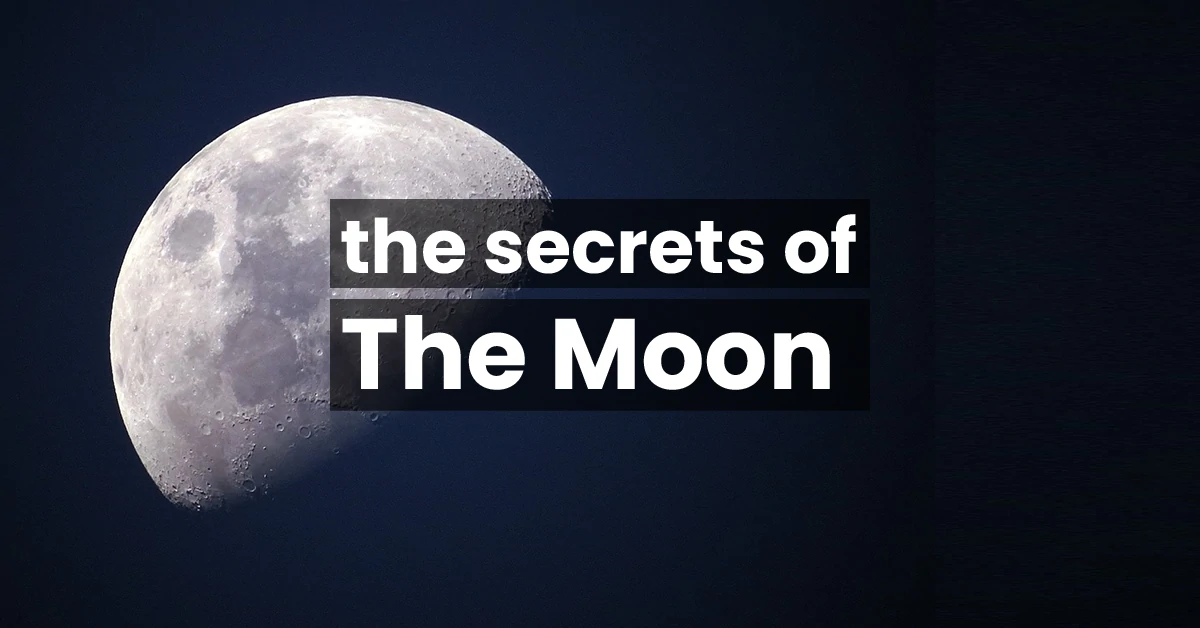
The Moon has been a celestial companion to Earth for billions of years, but there is far more to it than meets the eye. Often perceived as a barren, lifeless rock, the Moon harbors secrets that defy conventional wisdom. Scientists continue to uncover strange phenomena that challenge our understanding of this cosmic neighbor. Get ready to explore the Moon’s craziest secrets that will leave you questioning everything you thought you knew.
The Moon Isn’t Just a Rock in the Sky
How the Moon Affects Earth’s Tides and Life Itself
The Moon’s gravitational pull is the invisible force orchestrating Earth’s tides. Without it, our oceans would be stagnant, and marine life would suffer immensely. But its influence doesn’t stop at water—scientists believe the Moon plays a role in stabilizing Earth’s axial tilt, preventing extreme climate swings that could make life far more challenging.
The Surprising Link Between the Moon and Human Behavior
The Moon’s gravitational pull is the invisible force orchestrating Earth’s tides. Without it, our oceans would be stagnant, and marine life would suffer immensely. But its influence doesn’t stop at water—scientists believe the Moon plays a role in stabilizing Earth’s axial tilt, preventing extreme climate swings that could make life far more challenging.
The Moon May Have Once Had an Atmosphere
The Shocking Discovery of Ancient Lunar Air
Today, the Moon has no breathable air, but billions of years ago, things were different. Volcanic activity released vast amounts of gases, forming a temporary atmosphere. This discovery suggests the Moon was once more dynamic than we ever imagined.
Could the Moon Have Supported Life in the Past?
If the Moon had an atmosphere, could it have sustained life? While unlikely, scientists theorize that liquid water may have briefly existed on its surface, creating conditions favorable for microbial life. This possibility forces us to rethink our assumptions about where life can emerge.
The Mystery of the Moon’s Hollow Sound
Why Apollo Astronauts Reported the Moon “Rang Like a Bell”
When Apollo 12 deliberately crashed part of its spacecraft onto the Moon, seismic instruments recorded an eerie phenomenon—the Moon “rang like a bell” for over an hour. This bizarre occurrence has led to countless theories, some more outlandish than others.
What Scientists Think Is Causing This Eerie Effect
The leading explanation suggests that the Moon’s structure is vastly different from Earth’s. Unlike our planet, which has a fluid outer core that dampens vibrations, the Moon’s rigid, dry structure allows seismic waves to travel longer distances without fading.
Strange Lights and Unexplained Lunar Phenomena
Mysterious Glowing Spots That Appear on the Surface
For centuries, astronomers have observed brief flashes of light on the Moon’s surface. These Transient Lunar Phenomena (TLP) remain largely unexplained. Could they be meteorite impacts? Electrostatic discharges? Something more?
Are They Natural or Signs of Something More?
While most scientists lean toward natural explanations, some suggest these lights could hint at underground activity or unknown energy sources. Until we explore these regions up close, the mystery remains unsolved.
Water on the Moon: A Game-Changer for Space Travel
How Scientists Found Ice Hiding in Lunar Craters
For decades, the Moon was thought to be bone-dry, but recent discoveries of water ice in permanently shadowed craters changed everything. This revelation could revolutionize space travel.
What This Means for Future Moon Missions and Colonies
Water is essential for sustaining life, making lunar colonies a real possibility. It can also be split into hydrogen and oxygen, providing rocket fuel for deep-space missions. The Moon could become humanity’s stepping stone to Mars and beyond.
The Moon May Be Shrinking Right Now
The Surprising Evidence of Moonquakes
Seismic data reveals that the Moon experiences “moonquakes,” some strong enough to crack its surface. These tremors indicate that our celestial companion is still geologically active.
Why the Moon Is Still an Active and Changing World
Unlike Earth’s shifting tectonic plates, the Moon is shrinking due to its cooling interior. This contraction causes its surface to wrinkle, forming cliffs and faults that continue to evolve over time.
The Dark Side of the Moon Is Full of Mysteries
Why We Never See One Side of the Moon
Tidal locking ensures that one side of the Moon always faces Earth, leaving the other in perpetual secrecy. For centuries, we had no idea what lay on the far side.
The Strange and Unexplored Features Hidden in the Darkness
When probes finally mapped the far side, they found an alien-looking landscape with vast, unexplored craters and some of the oldest rocks in the solar system. Could this region hold clues to the Moon’s origins?
Hidden Tunnels Beneath the Lunar Surface
Massive Lava Tubes That Could Shelter Future Astronauts
Giant underground tunnels, remnants of ancient volcanic activity, could provide natural protection from radiation and extreme temperatures. These tunnels may be key to long-term lunar habitation.
Could These Tunnels Hold Clues About the Moon’s Past?
Some researchers believe these caves could preserve ancient geological records or even harbor frozen remnants of past atmospheres. Exploring them may unlock hidden chapters of lunar history.
Theories About the Moon’s Origin Will Shock You
The Giant Impact Theory and Why Some Scientists Question It
The prevailing theory suggests the Moon formed after a Mars-sized planet collided with Earth. However, some researchers argue that inconsistencies in lunar composition challenge this idea.
Alternative Ideas, From Captured Asteroid to Alien Mega-Structure
Other theories propose the Moon was once an independent body captured by Earth’s gravity or even suggest artificial origins—a claim popular among conspiracy theorists but dismissed by mainstream science.
The Future of Moon Exploration
NASA’s Artemis Mission and Plans to Put Humans Back on the Moon
NASA’s Artemis program aims to return humans to the Moon, establish a sustainable presence, and use it as a launchpad for Mars exploration.
How Private Companies Are Racing to Mine Lunar Resources
Companies like SpaceX and Blue Origin are eyeing the Moon’s resources, from water ice to rare metals, as the foundation for the next space economy.
Conclusion
The Moon remains one of the most mysterious celestial bodies, and every discovery raises new questions. Future missions may finally unravel its secrets, changing our understanding of both the Moon and our place in the cosmos.


